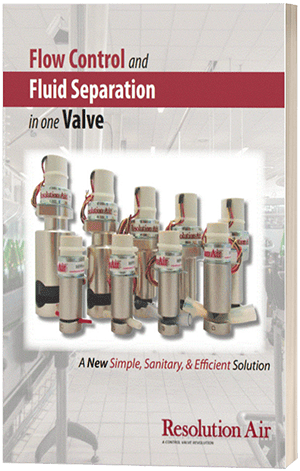
What Are You Looking For?
Jump to the section most relevant to your research.
MANUALS
In-depth explanations of proportional pinch valve technology and system design.
Engineering Guides
In-depth technical content to support system design, valve selection, and fluid control integration.
What Is a Proportional Pinch Valve?
An overview of proportional pinch valve technology, how it differs from conventional valves, and why it’s used in precision fluid control.
How to Choose the Right Proportional Pinch Valve
A practical guide covering flow rate, tubing size, pinch force, and control requirements to help you select the right valve for your system.
M Series vs H Series: Which Is Right for Your Application?
A side-by-side comparison of miniature and hybrid proportional pinch valve configurations, with guidance on when to use each.
Frequently Asked Questions
Common questions about proportional pinch valves, how they work, and how they are used in fluid control systems.
What is a Pinch Valve?
A pinch valve is a type of fluid control valve that regulates flow by compressing flexible tubing rather than allowing fluid to pass through internal valve components. This design keeps the fluid fully contained within the tubing, eliminating contact with the valve itself.
Pinch valves are commonly used in applications where contamination must be minimized or where maintaining a sterile fluid path is important. Because the fluid does not contact internal components, pinch valves are well-suited for bioprocessing and laboratory systems.
How Do Proportional Pinch Valves Work?
Proportional pinch valves control fluid flow by applying variable compression to flexible tubing. Unlike traditional pinch valves that operate in an open or closed state, proportional pinch valves allow continuous adjustment of flow.
By changing the degree of compression, the valve can regulate flow rates with precision. When paired with a driver or controller, proportional pinch valves can be integrated into automated systems and controlled using standard input signals.
When Should You Use a Proportional Pinch Valve?
Proportional pinch valves are used in applications where precise, repeatable control of fluid flow is required while maintaining a contamination-free fluid path.
They are commonly used when:
- Accurate fluid metering or dosing is required
- Sterility or fluid isolation is important
- Continuous control is needed instead of simple on/off operation
- Integration into automated systems is required
What is the Difference Between a Pinch Valve and a Solenoid Valve?
The primary difference between a pinch valve and a solenoid valve is how they interact with the fluid.
A pinch valve controls flow by compressing external tubing, keeping the fluid fully isolated from the valve. A solenoid valve typically allows fluid to pass through internal components, which may introduce contamination risks in certain applications.
Additionally:
- Pinch valves are often used for sanitary or sensitive fluids
- Solenoid valves are commonly used for general-purpose fluid control
- Proportional pinch valves provide continuous control, while many solenoid valves operate in on/off states
How Do You Design a Sanitary Fluid System?
Designing a sanitary fluid system involves minimizing contamination risks while maintaining precise control of fluid flow. This typically includes selecting components that prevent fluid exposure to internal surfaces and support clean operation.
Key considerations include:
- Using non-contact fluid handling components such as pinch valves
- Selecting appropriate tubing materials
- Maintaining a closed fluid path
- Ensuring compatibility with cleaning or sterilization processes
- Designing for consistent and repeatable flow control
How Can You Prevent Contamination in Fluid Systems?
Preventing contamination in fluid systems requires controlling how fluids interact with system components and ensuring that exposure to external environments is minimized.
Common approaches include:
- Using components that isolate the fluid path, such as pinch valves
- Maintaining closed-loop systems
- Selecting appropriate materials for tubing and components
- Minimizing dead volume and areas where fluid can stagnate
- Implementing proper cleaning and sterilization procedures
Quick Reference Glossary
Key terms used in proportional pinch valve and fluid control system design.
| Proportional Control | Continuous, variable control of valve position rather than simple on/off switching. Enables precise flow rate adjustment. |
| Pinch Force | The mechanical force applied to compress flexible tubing. Determines the valve’s ability to regulate flow through different tubing sizes and materials. |
| Wetted Components | Parts of a valve or system that come into direct contact with the process fluid. Pinch valves eliminate wetted components by keeping fluid inside the tubing. |
| 4–20 mA Signal | A standard analog control signal used in industrial automation. The EP-1 and DRV-1 accept 4–20 mA input to control valve position proportionally. |
| Non-Contact Fluid Handling | A design approach where the valve mechanism does not contact the process fluid. Reduces contamination risk and simplifies cleaning. |
| Single-Use System | A fluid handling system using disposable tubing and components, common in bioprocessing. Pinch valves are well-suited for single-use systems because the valve does not contact the fluid. |
| Stepper Motor | The motor type used in Resolution Air proportional pinch valves to precisely control valve compression and position. |
| Fluid Metering | Precise measurement and delivery of fluid volumes. Proportional pinch valves enable accurate metering by providing continuous, adjustable flow control. |
Browse by Application
Find technical content specific to your industry or application type.


Compare Your Options
Not sure which valve is right for your system? These resources can help you narrow it down.
M Series vs H Series
Side-by-side comparison of miniature and hybrid valve configurations to help you understand which is appropriate for your flow rate, tubing size, and force requirements.
Help Me Choose a Valve
Step-by-step guidance covering flow characteristics, tubing selection, control precision, and automation requirements to help you identify the right valve configuration.
Related Products
Explore the Resolution Air product families referenced throughout this knowledge center.
M Series
Miniature proportional pinch valves for low-flow, high-precision applications in compact systems.
H Series
Hybrid proportional pinch valves for higher flow, larger tubing, and more demanding fluid control applications.
EP-1 Easy Pinch Controller
All-in-one motion control system with touch screen HMI, dual-mode analog and digital control, purpose-built for Resolution Air valves.
Technical Documentation
Download datasheets, manuals, and other technical resources.
Need Help with Your Application?
If you need guidance selecting the right valve or integrating fluid control into your system, our engineering team is available to help.